CHAMP: Ecosystem for Sports and Esports
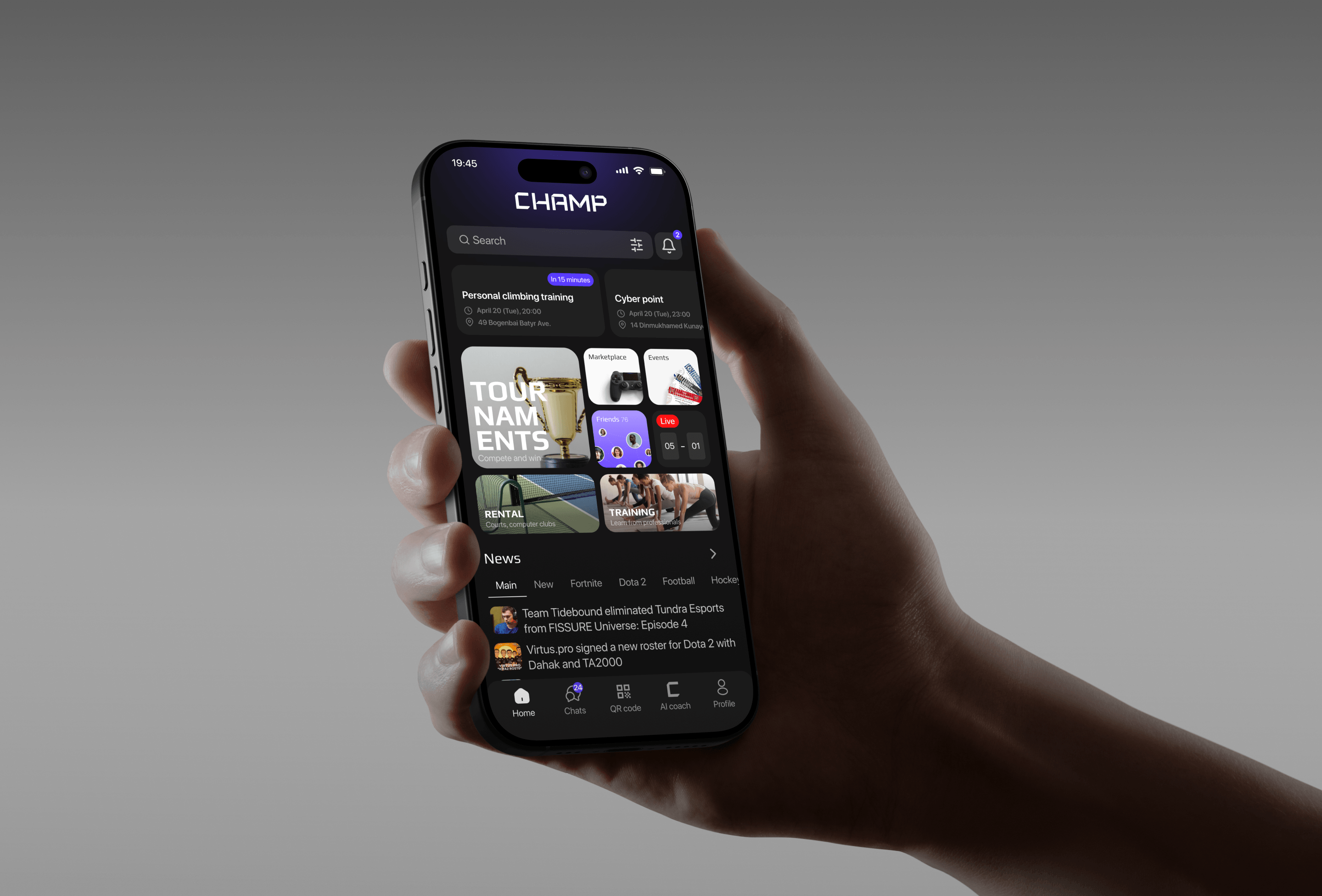
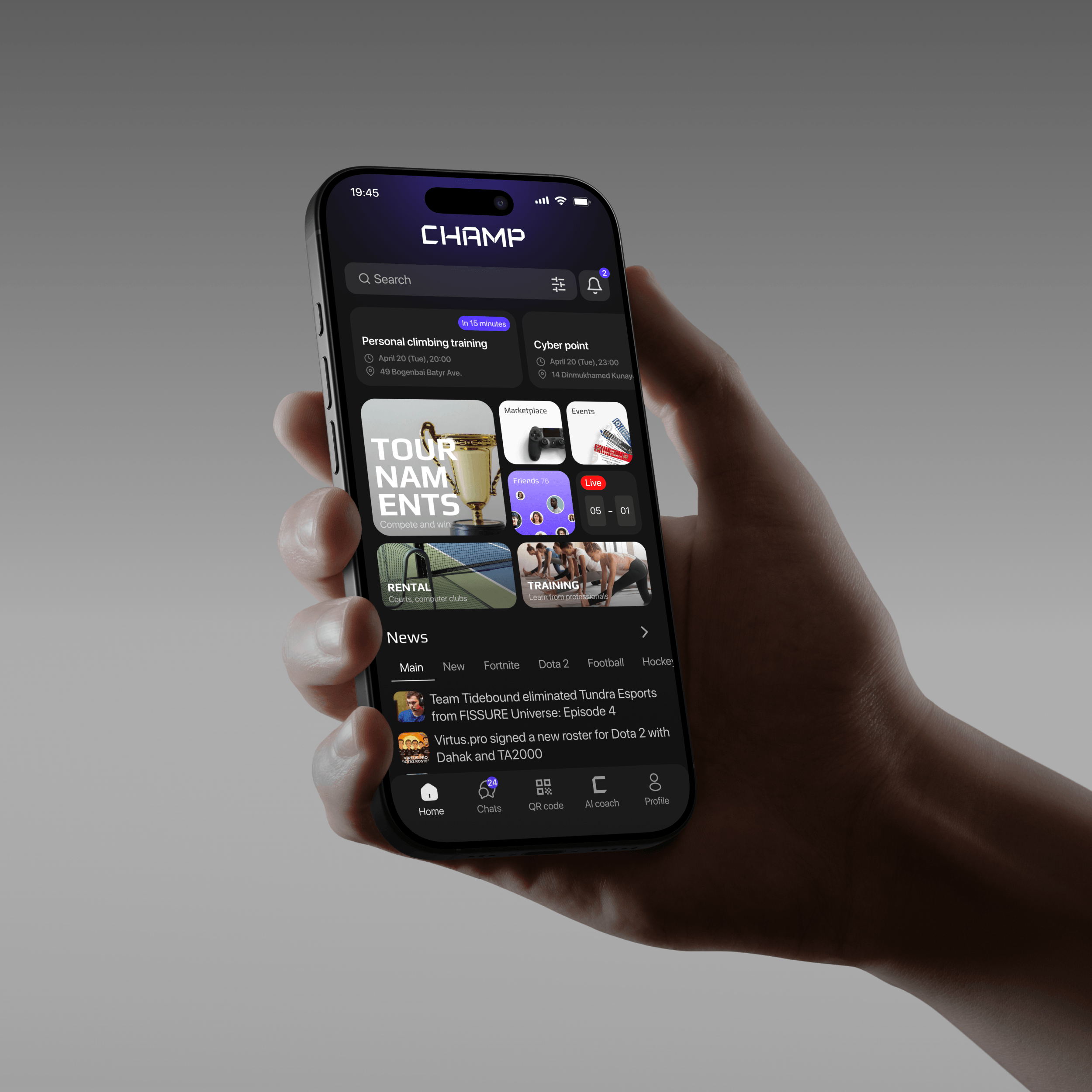
CHAMP is a Kazakhstan-based startup building a unified ecosystem for sports and esports. The product’s vision is to consolidate everything athletes and gamers need — tournaments, rankings, coaching, venue bookings, and social networking — into a single, seamless mobile experience.
Industry
E-SPORT
Product Type
APP
Period
Feb — Apr 2025
My Role & Impact
As a Product Designer, I joined the team to evolve their existing MVP (which focused on billiards tournaments and live streams). Over several months, I architected a new app structure to accommodate diverse sports modules, refreshed the UI, and prepared a high-stakes investor pitch deck.
Goal
To overhaul the existing UI, integrate new functional modules, scale the platform across multiple sports and esports categories, develop a commercial presentation for Tencent.
Research
The concept for a comprehensive sports ecosystem emerged in response to the growing global trend toward active lifestyles. However, this growth highlighted several systemic friction points in the existing user experience:
1
Venue booking services are typically limited to specific locations. Users who participate in multiple sports or visit different facilities are forced to juggle several platforms at once;
2
Finding a coach is often a tedious and inefficient process. Top-tier professionals usually have packed schedules, leading to lengthy back-and-forth messaging just to secure a time slot.
To identify ways to optimize this experience, I conducted a competitive audit of several product categories:
1
Sports venue booking platforms;
2
Yoga and fitness apps that integrate coach discovery and virtual class management;
3
Sports event aggregators, analyzed to understand event discovery, ticketing systems, and effective filtering by interests and geography.
Coming from a non-gaming background, I immersed myself in the esports domain by surveying active players and analyzing major gaming center platforms to uncover the unique requirements of this niche.
Hypotheses
Based on this analysis, I formulated the following hypotheses:
1
Users experience significant friction when switching between fragmented services;
2
Reducing the time-to-action for discovery and booking directly increases conversion rates;
3
Social connectivity is a primary driver of engagement. Users are more likely to return if they can track friends' activities and interact within the platform;
4
Coaches and organizers need to minimize time spent on manual coordination and messaging.
Solution
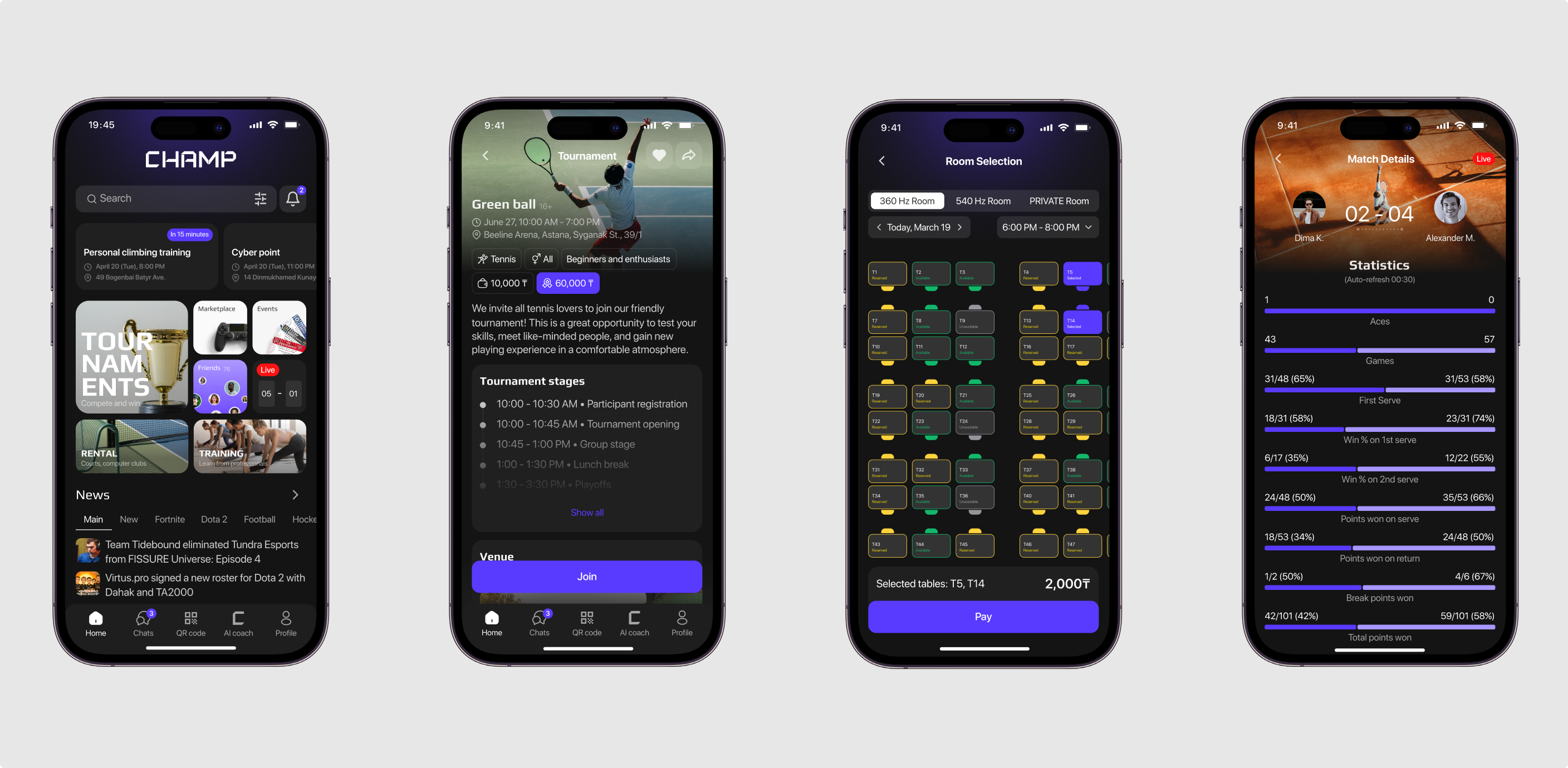
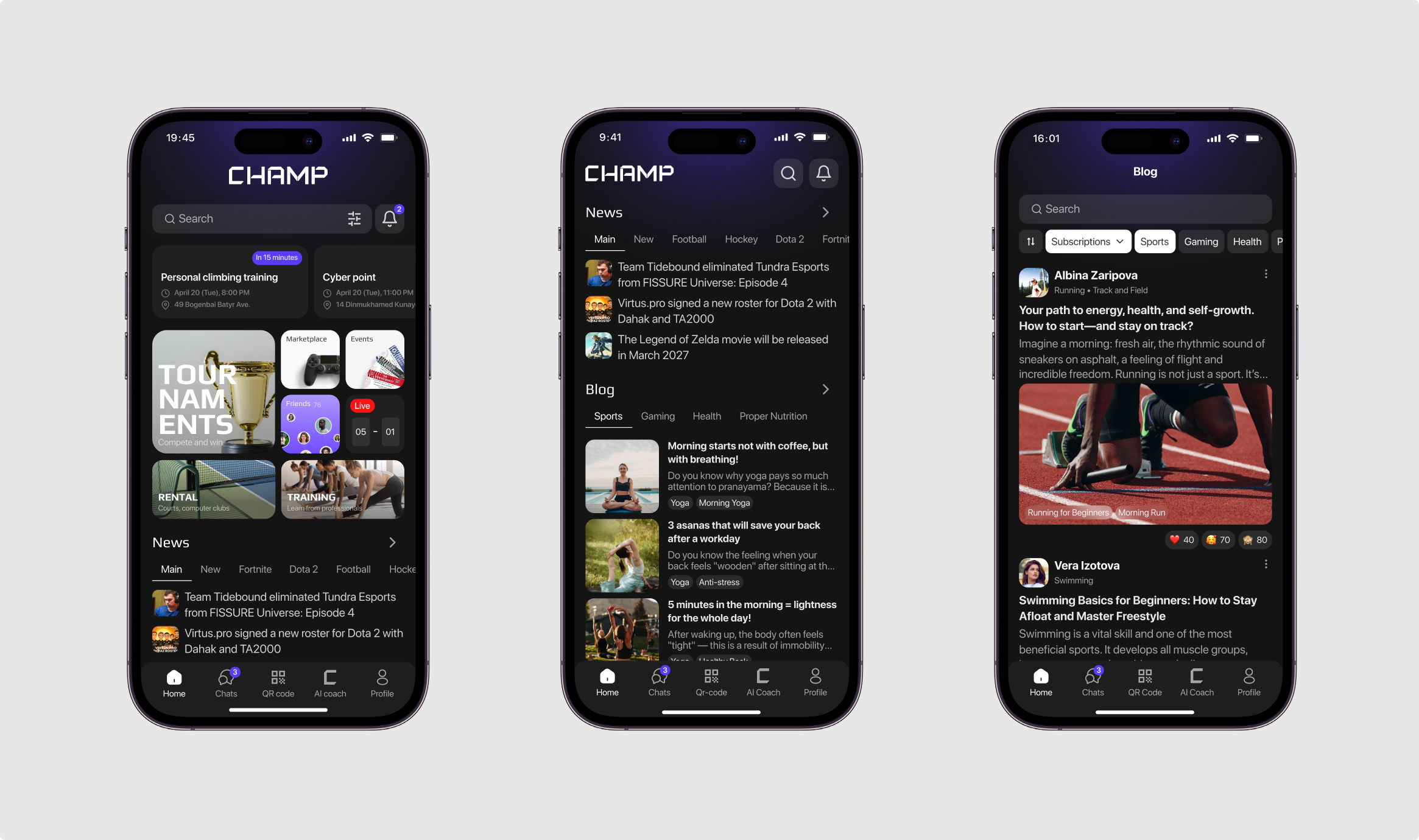
Home Screen. Users can track trending events and recommendations, quickly toggle between modules, and find activities tailored to their interests. By consolidating all key information in one place, the design enables faster orientation and a seamless transition to action.
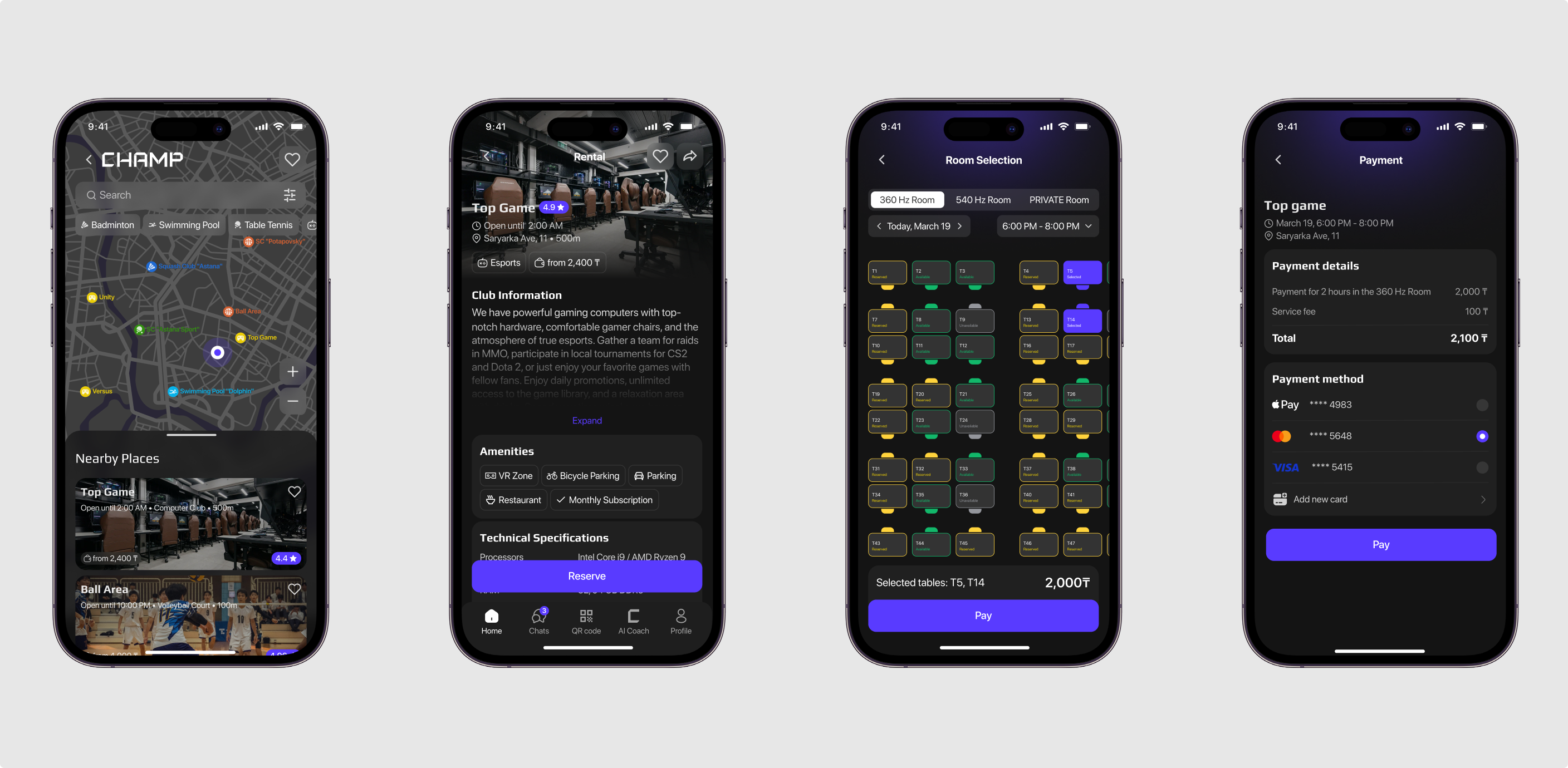
Venue Booking. Users can locate nearby facilities, view available time slots, and complete their booking in just a few steps. The entire process takes place within the app, eliminating unnecessary friction or outside messaging.
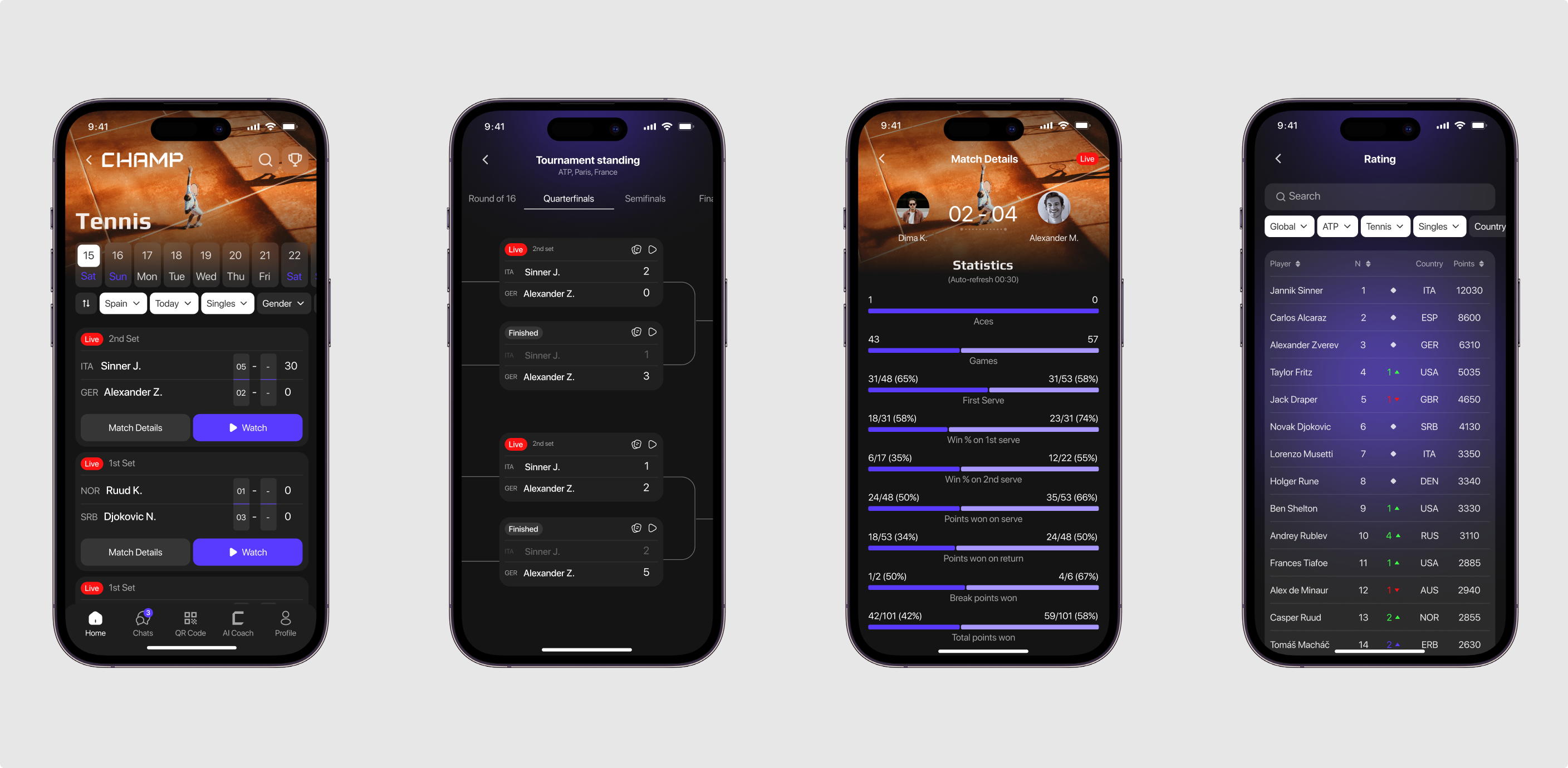
Rankings. This section allows users to track their progress, compare results with other participants, and analyze performance statistics. All data updates in real-time, providing a clear and transparent picture of their growth.
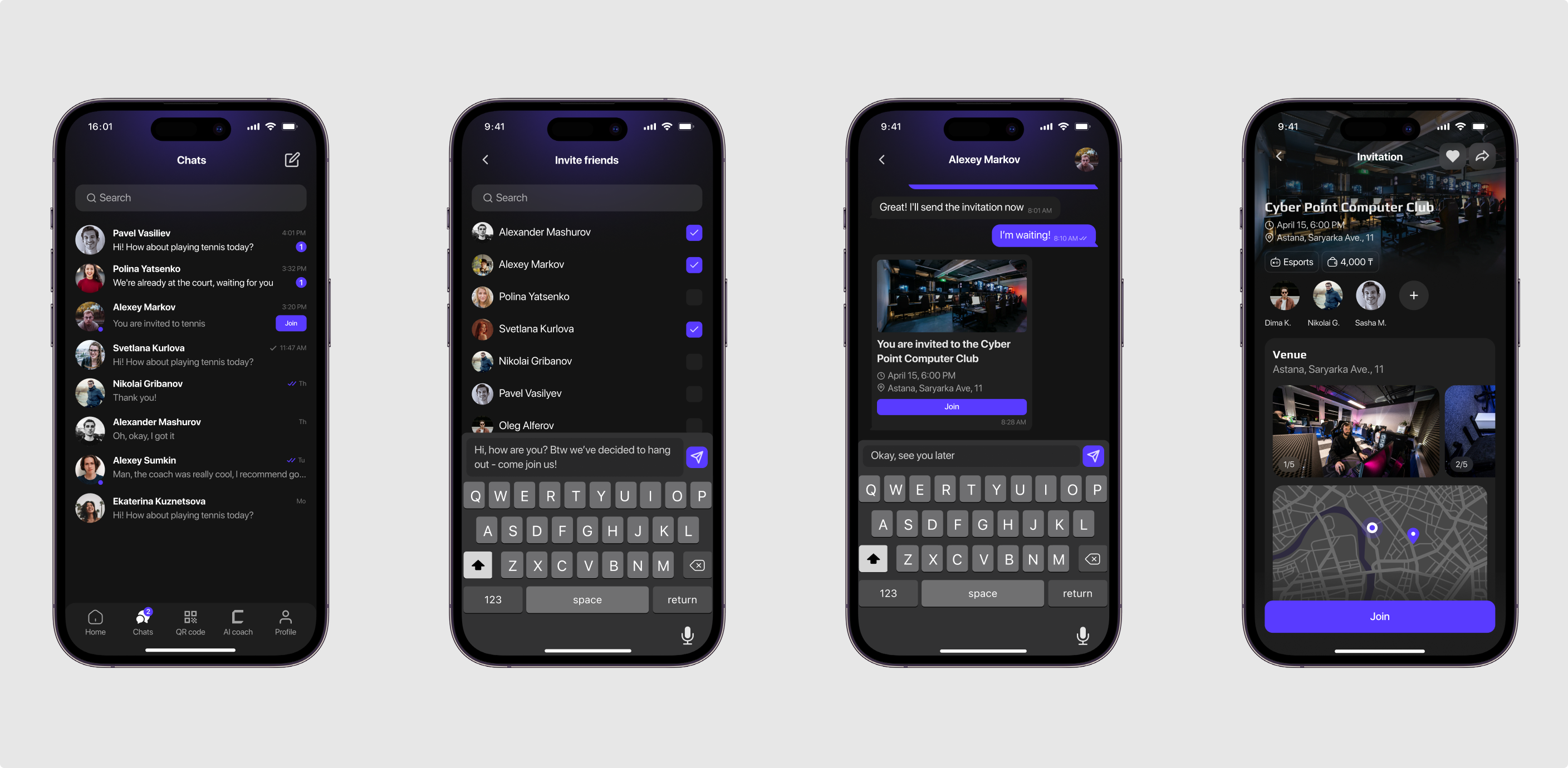
Chats. The integrated chat feature enables users to communicate, schedule training sessions, and send event invitations. This simplifies coordination, making interactions faster and more convenient.
Result
Ultimately, I delivered a cohesive, end-to-end product for development. While direct performance metrics are unavailable, my design was driven by these hypotheses, implementing solutions aimed at reducing search and booking time, boosting participation conversion, and streamlining communication between users and coaches. I also prioritized social features to strengthen engagement and drive higher retention through repeated interactions within the ecosystem.
*Мета, экстремистская организация, запрещена на территории РФ
©2026
Let’s work together!
